
Ingham County Arrest Records and Charges
An Ingham County arrest record is the account of the arrest itself. It notes who was taken into custody, who made the arrest, and the booking details logged at intake. That record sits on the law enforcement and jail side of the system. It does not, on its own, decide what a person is charged with. A charge is a separate step. Once someone is arrested, the Ingham County prosecutor reviews the case and decides which formal charges to file with the court clerk. At that point the charges become the court charge record, tracked as the case moves forward.
The two records answer different questions. The arrest and booking side shows custody: who is held, the booking number, and the hold. For that roster and the booking detail, the county jail lookup is the right tool, covered on the Ingham County inmate records page. The court charge record shows the accusation, the exact offenses the Ingham County prosecutor filed and how each one stands today. Court charges after arrest live in the case file, and the full file, with pleas and the final outcome, is described in the Ingham County criminal court records.
The arrest and booking side of the process runs through the Ingham County Sheriff's Office, whose main page links to its custody and records operations.
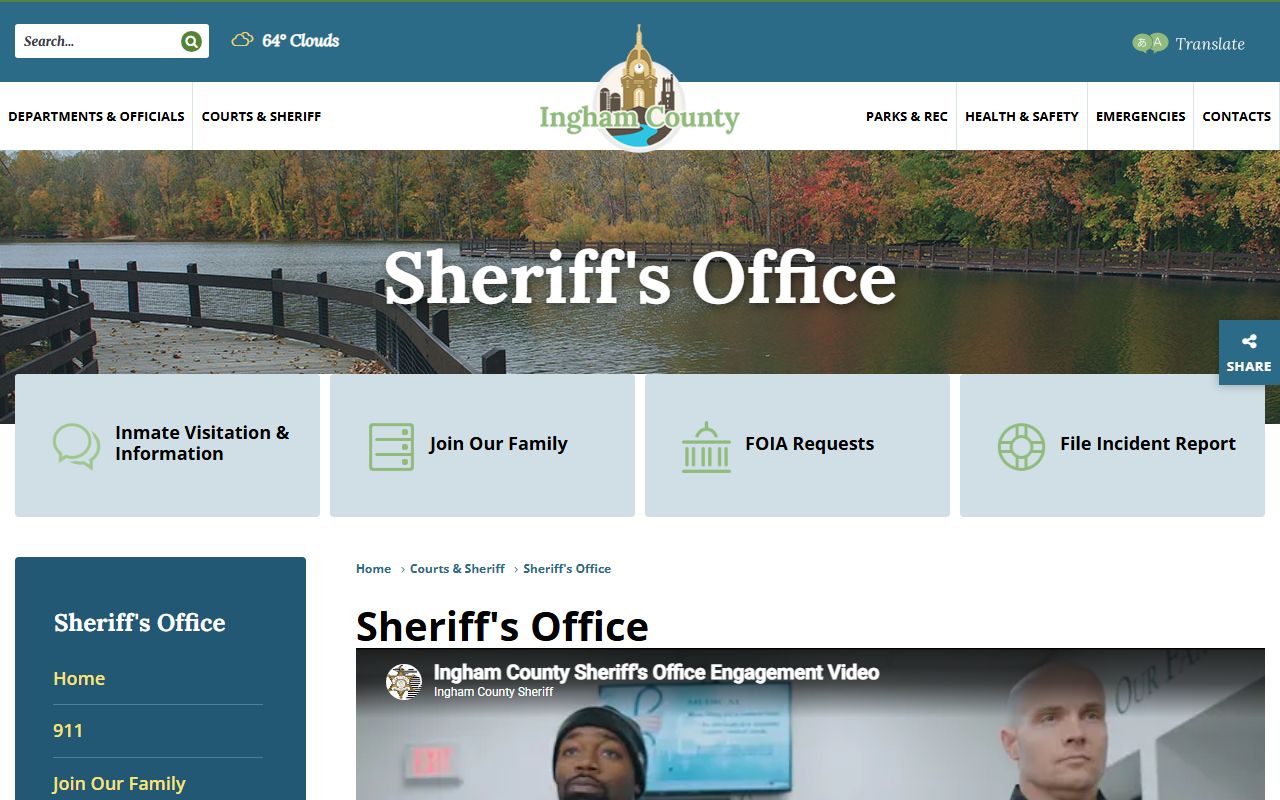
Booking data from the Ingham County sheriff feeds the custody roster, while the charging decision moves separately to the prosecutor and the courts.
Who Files Charges After an Ingham County Arrest
In Ingham County, the decision to charge belongs to the Ingham County Prosecuting Attorney, not the officer who made the arrest. Police forward a report. The prosecutor reviews it, weighs the evidence, and decides whether to file, what to file, and at what level. This is why an arrest does not always turn into a charge, and why the charge listed in court can differ from the offense named at the scene.
The office handles adult criminal charges across Ingham County and works by appointment for many services, so a call ahead helps. Its case decisions set the shape of the charge record that the public later sees.
Ingham County Prosecuting Attorney
303 W Kalamazoo Street, Floor 3-R
Lansing, MI 48933
(517) 483-6540
A charge does not mean a defendant stands alone. Qualifying defendants who cannot afford a lawyer are represented by the Ingham County Public Defender, led by Chief Public Defender Stephen Cornish. The office, at 2025 S. Washington Ave. in Lansing, supplies the appointed counsel that acts as the counterweight to the prosecutor through the life of a charge. The appointed-counsel side is handled by the Ingham County Public Defender office, which outlines eligibility and services on its site.

Where the prosecutor files and presses a charge, the public defender tests it, and both roles shape how the charge record ends up reading.
How Charges Get Filed After an Arrest in Ingham County
The charge record does not begin at the arrest. It begins when the Ingham County prosecutor files a charging document with the court. The document names each offense, cites the statute, and starts the case. Three main types exist, and which one is used turns on how serious the offense is.
| Complaint | Information | Indictment | |
|---|---|---|---|
| What It Is | A sworn charging paper that opens a case | A formal charge filed after a felony is bound over | A charge returned by a grand jury |
| Filed By | Officer or Prosecuting Attorney | Prosecuting Attorney | Grand jury |
| When Used | Misdemeanors and the start of most felonies | Felonies moving up to Circuit Court | Rare in Michigan state cases |
Where the charge is filed shapes the path. In Ingham County, misdemeanors and traffic charges start and usually finish in a district court, the 55th in Mason or the 54-A and 54-B courts in Lansing and East Lansing. A felony charge also opens in a district court, but after a preliminary examination it is bound over to the Ingham County Circuit Court on an information. That handoff is why one charge can show up under a district case number and then again under a circuit case number.
The first entries after a charge is filed often set the tone of the file. An arraignment date is scheduled, a bond amount may be set, and each charge is read into the record with its statute and level. In Ingham County these early events post to the case before any plea, so a search run soon after an arrest usually shows filed charges with a pending status rather than an outcome.
Note: A grand jury indictment is rare in Michigan state cases, so most Ingham County felonies reach the Circuit Court by information after a district court preliminary examination.
Charge Status in Ingham County Court Records
A charge is not fixed. As a case moves, each charge can change, and the record tracks those changes. A single arrest can produce several charges, and they do not all end the same way. One can be reduced while another is dropped. Reading the status of each charge matters more than counting how many were filed.
| Status | What It Means |
|---|---|
| Filed | The prosecutor has formally charged the offense and the case is open. |
| Amended | The charge wording, statute, or count was changed after filing. |
| Reduced | The charge was lowered to a less serious offense, such as a felony to a misdemeanor. |
| Dismissed | A judge ended the charge, so it carries no conviction. |
| Nolle Prosequi | The prosecutor chose to drop the charge and not pursue it. |
| Bound Over | A felony charge cleared a district court exam and moved up to Circuit Court. |
Watching the status is how a reader tells an open accusation from a closed one. A dismissed charge and a nolle prosequi both end a charge without a conviction, yet they arrive by different routes. An amended charge means the wording or the count changed. None of these are the same as a finding of guilt.
How to Find Ingham County Arrest Records and Charges
Charges and their status show up in the court case search, not in the jail roster. Ingham County runs a court record search that covers Circuit and Probate cases, and the state runs a separate case search for the district courts. Booking detail stays with the Ingham County sheriff and the jail lookup.
- Open the Ingham County court record search for Circuit and Probate cases.
- Search by last name and date of birth, or switch to a case-number lookup.
- Open the case and read the full list of filed charges.
- Check each charge's statute code, level, and current status.
District court charges, which include most misdemeanors and traffic matters, are searched through the statewide Michigan court case search under the 55th, 54-A, and 54-B court codes. The county's own search reaches criminal cases back to 2000 and other circuit and probate cases back to 1986. When a case is older, sealed, or not showing online, the next step is a records request to the Clerk of the Circuit Court. That request can be made in person at the Ingham County Courthouse counter at 315 South Jefferson in Mason, at the Veterans Memorial Courthouse on West Kalamazoo in Lansing, or by phone and mail. The clerk's copy and record request page lists the fees and the channels.
An online result is a summary, not the full file. The official charge record stays on file at the Ingham County clerk's office, so a certified copy or a full case file may still call for an in-person or mailed request. This matters most in Ingham County when a charge was reduced or dismissed and the reader needs the paperwork that proves it.
Note: The Ingham County search redacts personal protection order detail, so a charge tied to a PPO may not appear in the public result even when the case exists.
Charge Codes and Severity Levels
Every charge points to a statute, and the statute sets the level. Michigan sorts offenses into misdemeanors and felonies, and the level drives which court hears the case and what penalty is possible. A misdemeanor is the lower tier, often handled start to finish in an Ingham County district court. A felony is the higher tier and is the reason a case gets bound over to the Ingham County Circuit Court. One arrest can carry both, plus lesser counts, each on its own coded line.
Traffic and motor vehicle charges carry their own grading. Michigan law separates civil infractions from misdemeanor and felony driving offenses, and the driver responsibility and license rules in MCL 257.321a spell out how those offenses are ranked and what they do to a driving record. The way a motor vehicle offense is classified is fixed in that statute.
The full text of the driver classification provisions is published by the Michigan Legislature.
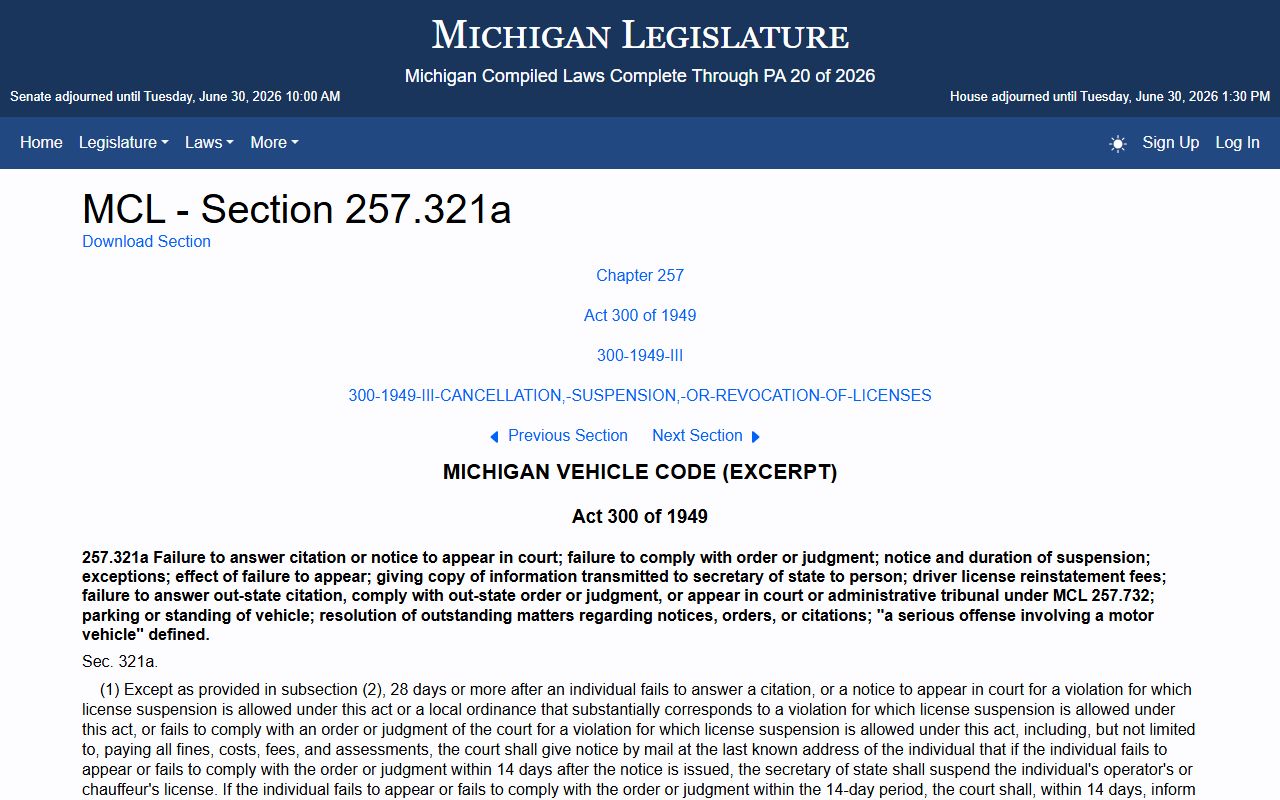
That grading decides whether a driving charge rides alongside a criminal case or moves through the traffic division on its own.
Charges vs Convictions in Ingham County
Being charged is not the same as being found guilty. A charge is an accusation. It means the Ingham County prosecutor believes there is probable cause, the low bar needed to file. A conviction comes only later, after a guilty plea or a verdict, and it needs proof beyond a reasonable doubt. Both a charge and a conviction can be public, so a record that shows a charge does not tell the reader how the case ended.
| Charge | Conviction | |
|---|---|---|
| Stage | An accusation | A guilty plea or verdict |
| Proof Needed | Probable cause | Beyond a reasonable doubt |
| Who Decides | The Prosecuting Attorney | A judge or jury |
| Public Record | Yes | Yes |
Note: Read a charge as an open question until the disposition line confirms a plea, a verdict, or a dismissal, since the two carry very different weight.
Restricted Charge Records in Ingham County
Not every charge is open to the public. Juvenile charges are the clearest example. Michigan law, at MCL 712A.28, limits who may see a minor's court record, so most juvenile charge detail stays out of the public search. Charges tied to an active investigation can also be held back before they are ever filed.
Charges that end in dismissal, and older cases that have been set aside or sealed, may drop out of public view even though the arrest once happened. The way access to court files is controlled, including the confidential and family tracks, is set out in the Michigan Court Rules, published by the state courts.
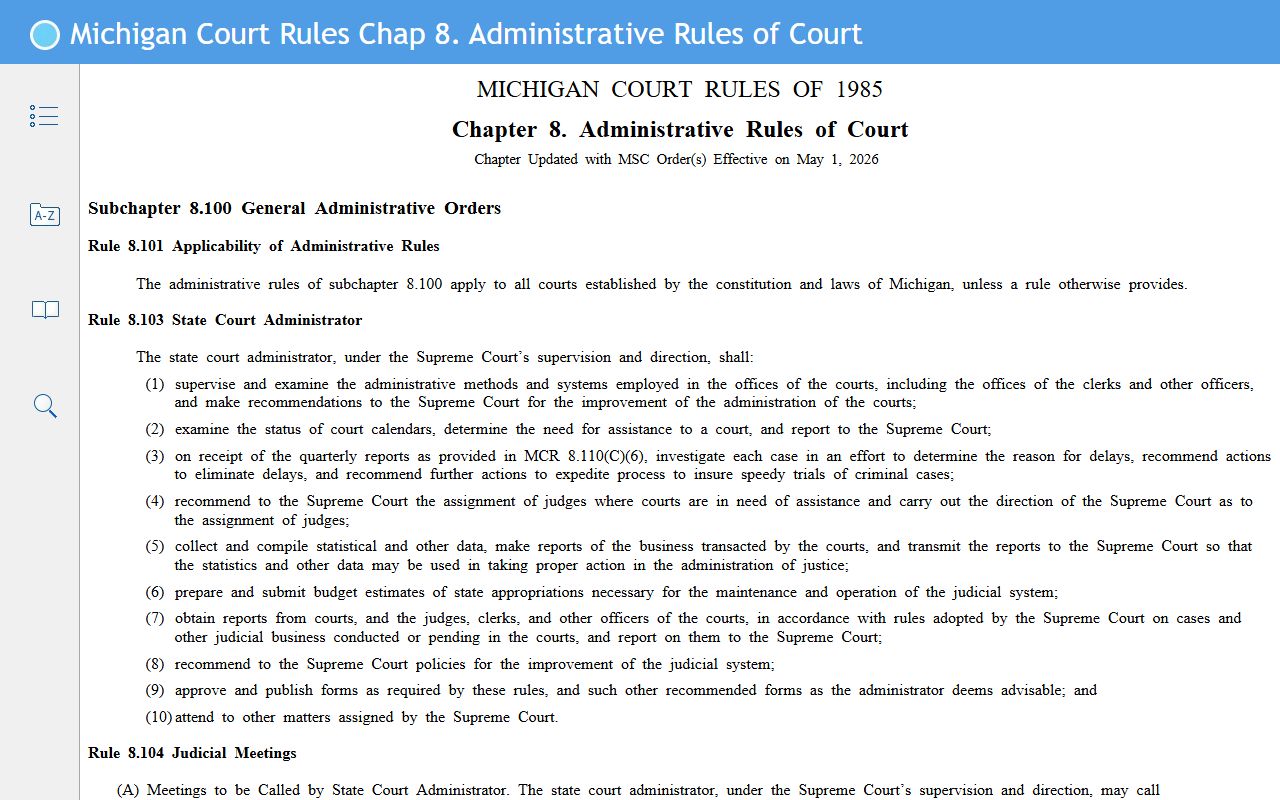
Those rules are the reason a juvenile or sealed charge can be missing from an otherwise complete Ingham County search. Anyone using charge data for hiring, housing, or credit should treat a public search as background context, not a compliant screening report.
Important: This resource is not a consumer reporting agency under the FCRA, and its charge information cannot be used for employment, tenant, credit, or insurance screening.