
What Ingham County Probate Records Cover
The Ingham County Probate Court handles the legal winding-up of a person's affairs after death, along with cases where an adult or a child needs someone appointed to manage care or money. Its docket covers decedent estates, guardianships, conservatorships, and trust matters. When someone dies owning property, the estate is administered by the Ingham County Probate Court. When a minor or an incapacitated adult cannot handle personal or financial decisions, a guardianship or conservatorship case opens in the same court. All of this probate work in Ingham County is done at the Veterans Memorial Courthouse in Lansing.
The Ingham County Probate Court's own overview page lays out the filing and records direction for these cases. You can review it at the Ingham County Probate Court site before you file or request anything.
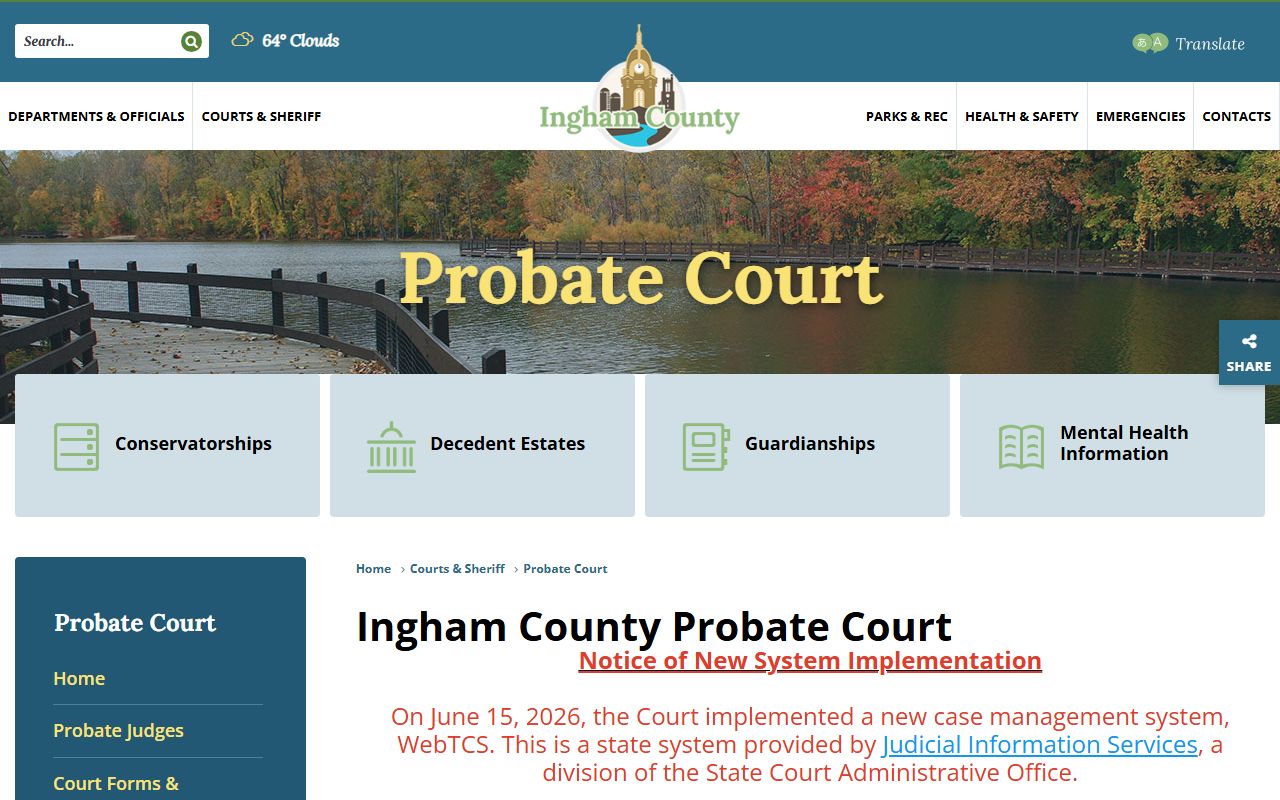
That overview points visitors toward the right form for an estate, a guardianship, or a copy request. The records these cases create are mostly open to the public. A single file can hold the will, the petition that opened the case, the inventory of assets, creditor notices, yearly accountings, and the final order that closes the estate. Trust administration and certain mental-health matters also reach the Ingham County Probate Court's calendar, though the last category carries confidentiality limits. For files tied to weddings or divorces rather than estates, the county clerk and circuit court hold those instead, and the Ingham County marriage and divorce records sit with the clerk.
Probate Terms Defined
Probate paperwork leans on a small set of legal terms that show up again and again in Ingham County filings. Knowing them makes a case file far easier to read, and it helps when you talk to court staff or fill out a form.
- Testator
- The person who wrote the will. When a testator dies, the will is filed with the court and its terms guide how the estate is settled.
- Executor
- The person named in the will to carry out its terms. In Michigan this role is often called the personal representative, and the Ingham County Probate Court grants that authority.
- Intestate
- Dying without a valid will. State law then sets who inherits, and the Ingham County Probate Court appoints someone to administer the estate.
- Guardianship
- A court order placing responsibility for a person's care and daily decisions with an appointed guardian, used for minors or incapacitated adults.
- Conservatorship
- A court order giving an appointed conservator control over another person's money and property when they cannot manage it themselves.
Opening an Estate in Ingham County Probate Court
Opening a decedent estate starts with an application or petition filed with the Ingham County Probate Court. The filer, often a surviving spouse or an adult child, asks the court to admit any will and appoint a personal representative. Michigan offers both informal and formal routes, and which one fits depends on the estate and whether anyone contests it. The Ingham County Probate Court's deceased-estate page walks through the filing and fee process in plain steps.
You can read the full sequence on the deceased estate filing page, which lists the forms and the money due at each stage.
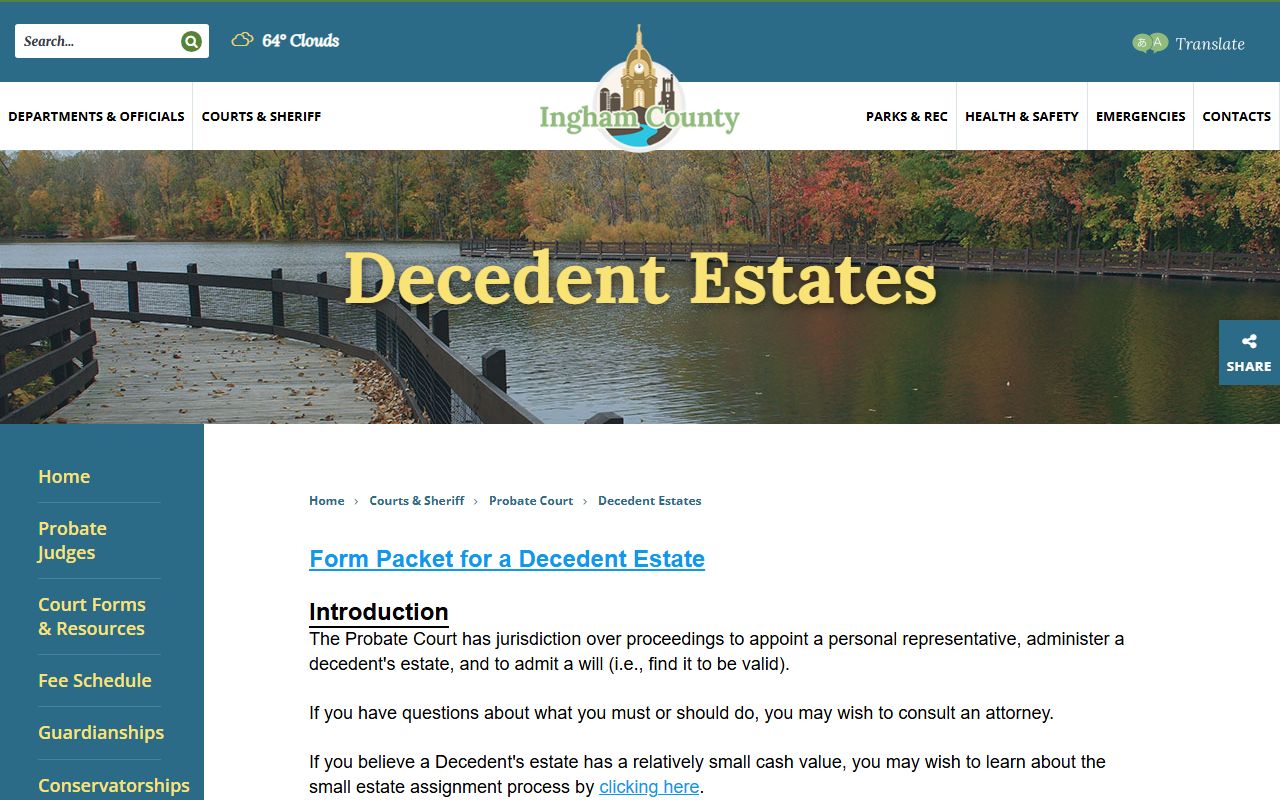
That page also explains the notices an estate must send once it is open. After filing, the case tends to follow a set order:
- File the application or petition to open the estate and admit the will if one exists.
- Receive letters of authority naming the personal representative who will act for the estate.
- File an inventory of the estate's assets within the court's deadline.
- Send creditor notices and publish the required notice so claims can be filed on time.
- Prepare accountings that show money coming in and money going out.
- File the closing paperwork and final account to settle and close the estate.
Publication notices are court-directed and usually run in a local newspaper, giving unknown creditors a fair chance to come forward before the estate is distributed.
Note: The inventory and accounting deadlines are firm, so a personal representative who misses one may need to explain the delay to the Ingham County Probate Court.
How to Search Ingham County Probate Records
Michigan's statewide case search is the quickest way to look up an Ingham County probate case online. The Probate Court files under court code P33 in that system, so searching that court pulls estate, guardianship, and conservatorship matters filed in the county. A name or a case number is usually enough to find the right file.
The state tool sits at the Michigan case search for Probate Court P33, and it returns the docket for cases the Ingham County Probate Court has published.
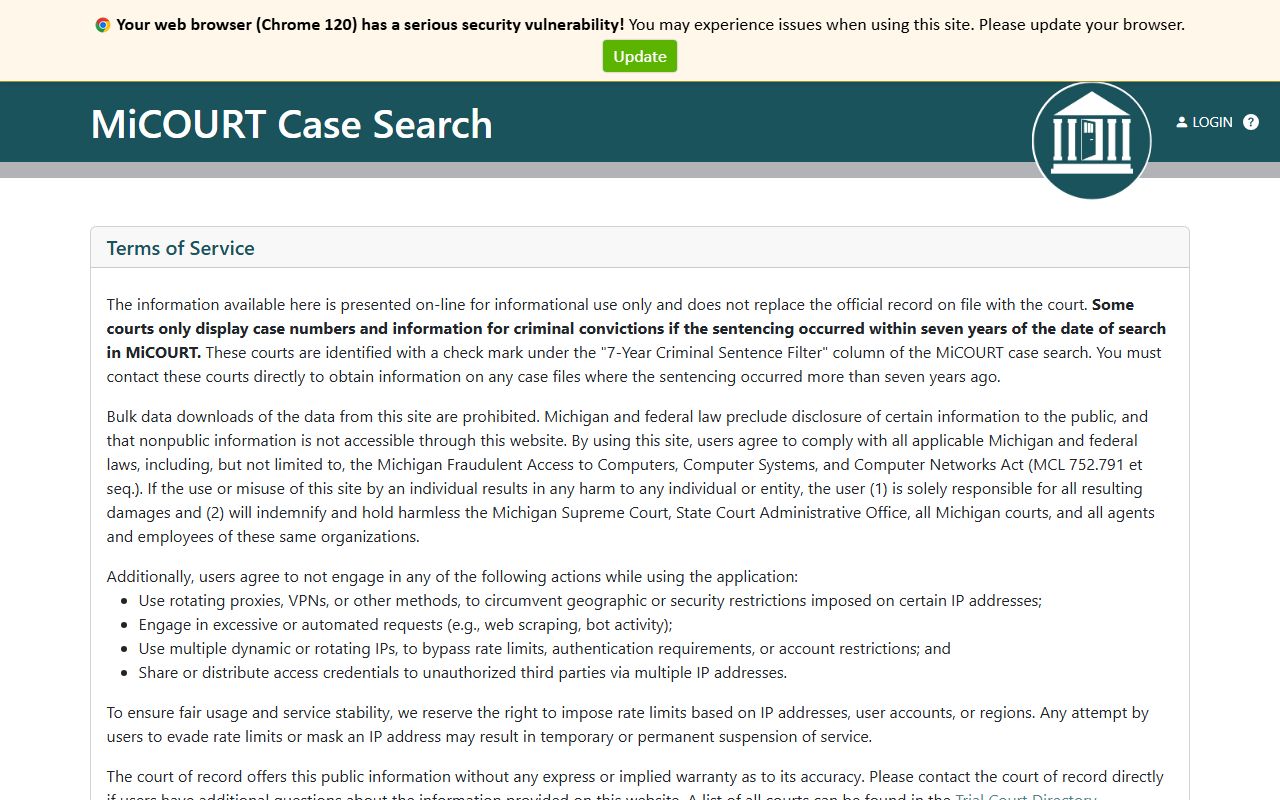
That screen lists filings and hearing dates once you land on a case. Ingham County also runs a combined circuit and probate record search that reaches many local files. Older cases, sealed matters, and full document images are often not online, which is where the Probate Register's office comes in. Staff there pull files, confirm case status, and process copy requests by email, phone, or mail. Records that predate the digital system usually come through an in-person or mailed public request rather than a screen, so a case from decades ago may take a staff search of the archive. A practical search runs like this:
- Open the state case search and select the Probate Court under court code P33.
- Search by party name or case number to find the matching estate or guardianship file.
- Review the docket entries the result returns for filings and hearing dates.
- For documents not shown online, contact the Probate Register's office by email, phone, or mail.
- Visit the register's office in person to inspect a file or request certified copies.
Ingham County Probate Court Location
Probate filings and in-person records requests run through one location in downtown Lansing. The Probate Register's office is the counter to visit for file inspection, certified copies, and questions about a pending estate. Calling or emailing ahead helps confirm that the file you want is on site and not held in an archive.
Ingham County Probate Court
Veterans Memorial Courthouse
313 West Kalamazoo Street
Lansing, MI 48933
The same building houses circuit filings, so signage and floor directions matter when you arrive. Bring a case number if you have one, since it speeds up any record pull at the desk.
Ingham County Probate Filing Fees
Filing an estate in Ingham County carries set fees, and the Ingham County Probate Court's deceased-estate page lists the main charges. The application to open a decedent estate and the cost of certified letters of authority are the two most common up-front expenses. Other charges depend on the size of the estate and on how a record is requested.
| Item | Amount |
|---|---|
| Deceased estate application (filing) | $175 |
| Certified copy of letters of authority | $13 |
| Inventory filing fee | Scaled by estate value |
| Copy, exhibit, and transcript fees | Tied to the record channel |
The inventory fee is not a flat number. It scales with the total value of the estate's assets, so a larger estate pays a larger inventory fee. Copy, exhibit, and transcript charges depend on how the record is requested and prepared, whether that is a routine copy or a full transcript ordered through the court records channel.
Note: Fee amounts and payment methods can change, so confirm the current figure with the Ingham County Probate Court before you mail a payment or file in person.
Certified Copies of Ingham County Probate Records
Banks, title companies, and other agencies usually want a certified copy rather than a plain printout. A certified copy of letters of authority, priced at $13, proves that a personal representative holds the power to act for the estate. The Probate Register's office issues certified copies in person, by mail, or after an emailed or phoned request.
Plain copies cost less, but only certified copies carry the court seal that outside institutions accept as proof. A full transcript is a separate order handled through the court records channel, and copy and exhibit fees are added to the cost when a transcript is prepared. If your matter also touches a circuit filing, fee and copy questions can go to the Clerk of the Circuit Court, which shares the same Lansing courthouse. For probate documents specifically, the register's office is the one that seals and releases the record.
Restricted Ingham County Probate Records
Not every probate file is fully open. Adoption records are the clearest example, and in Ingham County their location depends on when the case was filed. Older adoption matters were handled in the probate context, while later routing moved adoption records toward the circuit side, so a request may point to a different court depending on the filing year. Confirming the year before you ask saves a wasted trip.
Mental-health commitment and treatment filings carry confidentiality flags and are not part of the open public record. Guardianship files involving minors and certain sensitive details can also be limited. Even in files that are open, some data is routinely held back, such as Social Security numbers, financial account details, and sensitive witness or victim information. Michigan's public information framework sets what is open, and the list of exemptions spells out what stays closed. Court staff apply those rules each time they release an Ingham County probate file.
Note: When a record is restricted, the Ingham County Probate Court can still confirm that a case exists even if it will not hand over the sealed documents inside the file.